
A Helpful Guide to Spotting Leopards in the Kruger
A leopard has no wish to be found. They are elusive and tend to be incredibly camera shy, slinking away just as the excited crowd of tourists raise their lenses. Of all the animals of the Kruger, the leopard is one of the most sought-after sightings and yet only a handful of people visiting the park get to check them off their list.
To help you join the ranks of those lucky few, we’ve put together a guide that you can use to improve your chances.
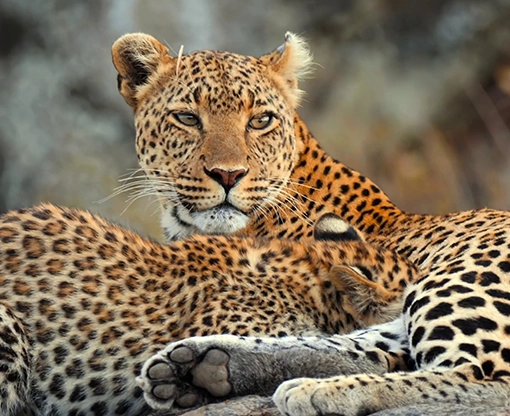
Where Are the Best Places to See Leopards in the Kruger?
The best places to see leopards in the Kruger are the leafy riverbanks of the Sabie, Sand and Olifants rivers, where tall trees and dense cover suit these graceful cats perfectly.
Riverbeds act as natural corridors, and shaded branches give leopards a cool place to rest through the heat of the day.
An estimated 1 000 leopards roam the park and when spread out over 19 485 square kilometres, the routes that you travel on during your stay will be quite important:
- Sabie River, Skukuza to Lower Sabie where you should check the tall riverine trees.
- Sand River, near Skukuza, especially the rocky outcrops and shady fig trees.
- Olifants River, on the steep, shaded banks that give leopards plenty of cover.
When is the Best Time of Day and Year?
Dawn and dusk are best, because leopards hunt mostly in the cool hours and through the night.
Camp gates open at first light, and the earlier you can get into the park the better as you’ll be able to spot fresh tracks in the dust.
Late afternoon is a great time too, as leopards stir from their afternoon slumber and begin to move just before sunset.
If you book a safari with a tour operator, you can expect two game drives a day at the best hours.
The dry season, May to September, is the best time of year to visit. During the Kruger’s winter months, barely any rain falls and the bush dies back enough to give you a clear view of what is happening just beyond the shrubs next to the road.
How Do You Actually Spot a Leopard?
No wildlife sighting is a guarantee because the Kruger is just so wonderfully unpredictable but that doesn’t mean that these tips won’t come in helpful:
- Scan the forks of large trees, such as marula and sycamore fig. A dangling tail is often the only clue.
- Listen for alarm calls. An impala’s sharp snort, a barking baboon or a scolding squirrel suggests a predator nearby.
- Look for rosettes rather than colour. Broken, dappled patterns beat golden fur every time.
- Drive at around 20 km/h. The park limit is 50 km/h on tar and 40 km/h on gravel, and slower means sharper eyes.
- Switch off the engine and wait 15 minutes at any promising tree or riverbed. Patience is rewarded.
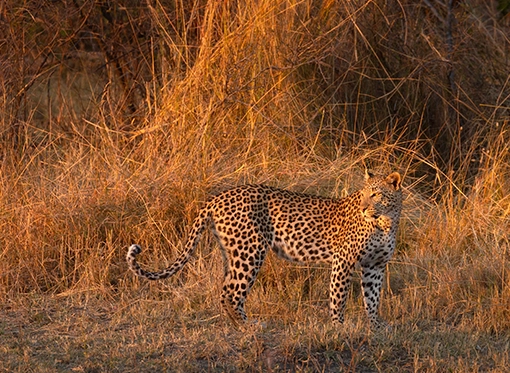
What Should You Do When You Spot a Leopard?
Once a leopard is in view, you need to be as quiet as possible.
Turning the engine off, keeping voices low and movements slow, so the cat carries on as though the vehicle were part of the landscape, is the best thing to do when you come across a leopard.
Some sightings will only last a few minutes, others a full golden hour, but whichever you are treated to, try to take it all in.
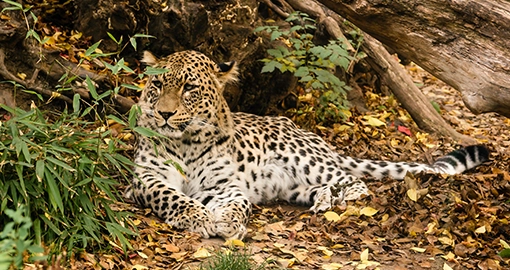
Why Book a Guided Drive?
A guided drive beats a self-drive for finding leopards, because having trained eyes read tracks, listen for alarm calls and know what to look out for in the long grass will give you some advantages over those driving themselves through the park.
Our guides know the Kruger’s riverbeds well, which turns long stretches of empty road into a front-row seat to some out of this world sightings.
Book a guided drive with Royal Safaris and let our experience guides take you into the best parts of the Kruger to spot a leopard.
Frequently Asked Questions
Where is the best place to see leopards in the Kruger?
The Sabie and Sand River areas near Skukuza are top spots, along with neighbouring Sabi Sand and Timbavati, where off-road tracking and night drives are possible.
What time of day are leopards easiest to spot?
Early morning and late afternoon. Leopards are mostly nocturnal, so dawn and dusk drives often catch them ending or beginning a hunt.
How many leopards live in the Kruger National Park?
Estimates put the population near 1,000. Their shy nature makes sightings rarer than those of lions or elephants.
Are leopards dangerous to visitors?
Leopards are wild predators that avoid people. Staying inside the vehicle at all times keeps every sighting safe, as park rules require.
Do leopards really rest in trees?
Yes. They spend much of the day dozing on branches and hoist kills into trees to keep them from lions and hyenas.


